
Most small businesses don’t have a lead problem. They have a time and follow-up problem.
The enquiries come in. Someone rings back, sends a quote, then gets pulled onto a job. A week later nobody’s quite sure whether the customer replied, or who was meant to chase. The lead didn’t say no. It just went quiet, and so did you.
Closing more leads usually comes down to a few simple habits done every week: knowing your process, setting a target, staying in touch and keeping an eye on what’s moving. Here’s how to put those habits in place, and how a CRM makes them much easier to stick to.
1. Define your sales process
Start by writing down what needs to actually happen when a new enquiry lands. Not what should happen.
Who picks it up? How fast do they reply? Do you send a quote straight away, or book a visit first? What happens if the customer goes quiet? Answering these questions honestly often shows up the gaps on its own, like quotes that never get chased or enquiries that sit in an inbox over the weekend.
Next, turn those steps into stages. These are the phases a lead passes through before you count it as won. For a lot of service businesses, it looks something like this:
- New enquiry
- Contacted
- Quote sent
- Follow-up
- Won or lost
A dog groomer might add “Trial booked”. A builder might add “Site visit”. Keep it short. If you can’t explain a stage in one sentence, it’s probably two stages.
The most useful part of this exercise is agreeing what moves a lead from one stage to the next. “Quote sent” should mean the quote has actually gone, not that someone meant to send it. When everyone uses the stages the same way, you can trust what they tell you and act accordingly.
2. Plan and set targets to stay focused
“Get more work” isn’t a target, it’s a wish. A target gives you something to check against on a Tuesday afternoon when you’re deciding whether to chase a quote or answer emails.
Work backwards from what you need. Say you want eight new jobs a month, and roughly one in three quotes turns into a job. That means sending around 24 quotes. If half your enquiries get as far as a quote, you need about 48 enquiries. Suddenly you know whether your problem is too few enquiries, too few quotes going out, or too few quotes being accepted.
It helps to set targets for the things you control as well as the results. You can’t make a customer say yes. You can make sure every enquiry gets a reply within a working day, and every quote gets a follow-up within a week. Those are the habits that move the bigger numbers.
Keep it to two or three targets at a time, and look at them weekly. Any more and they become background noise.
3. Stay in touch through marketing channels and automation
Very few people say yes on the first conversation, it takes an average of 6 to 8 touchpoints to close a lead. They’re comparing quotes, checking with a partner, or waiting for payday. The business that’s still in touch when they’re ready usually wins the work.
Think about where your prospects already pay attention. For some it’s email. For others it’s a text, a WhatsApp message or a post on Facebook or Instagram. You don’t need to be everywhere. Pick the one or two channels your customers actually reply on and use them well.
A few simple messages go a long way:
- A quick thank you after an enquiry, with what happens next
- A friendly nudge a few days after a quote goes out
- A reminder the day before a visit or appointment
- An occasional update, offer or seasonal tip for people who didn’t book this time
The catch is time. Sending these by hand works when you’ve got five leads but it falls apart at fifty. That’s where automation helps. You set the message up once, and it goes out at the right moment without anyone having to remember.
Coming soon in Astrokit: automated emails through Astrokit Relay, SMS reminders, and follow-ups that send when a lead moves to a new stage. Move a lead to “Quote sent” and a follow-up can be lined up for three days later, so the nudge happens even on your busiest week.
4. Track progress and activity
You can’t improve what you can’t see. If your leads live across an inbox, a notebook and a spreadsheet, you’re relying on memory to know what’s happening. Unfortunately, memory is not a system.
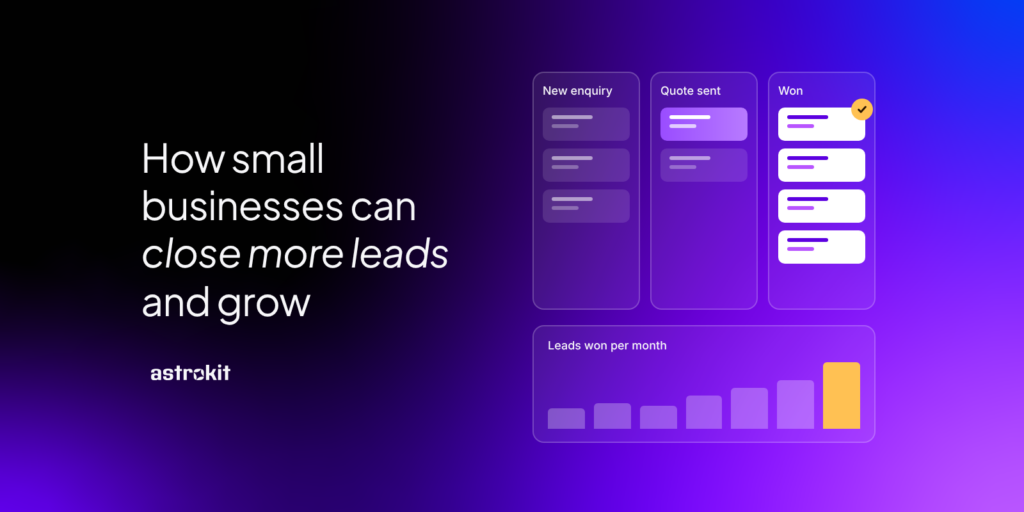
This where Astrokit CRM can help. Every lead sits on a visual pipeline using the stages you defined in step one. As things move forward, you drag the lead to the next stage. At a glance, you can see how many leads are at each stage and what they’re worth, so you know straight away if quotes are piling up without replies.
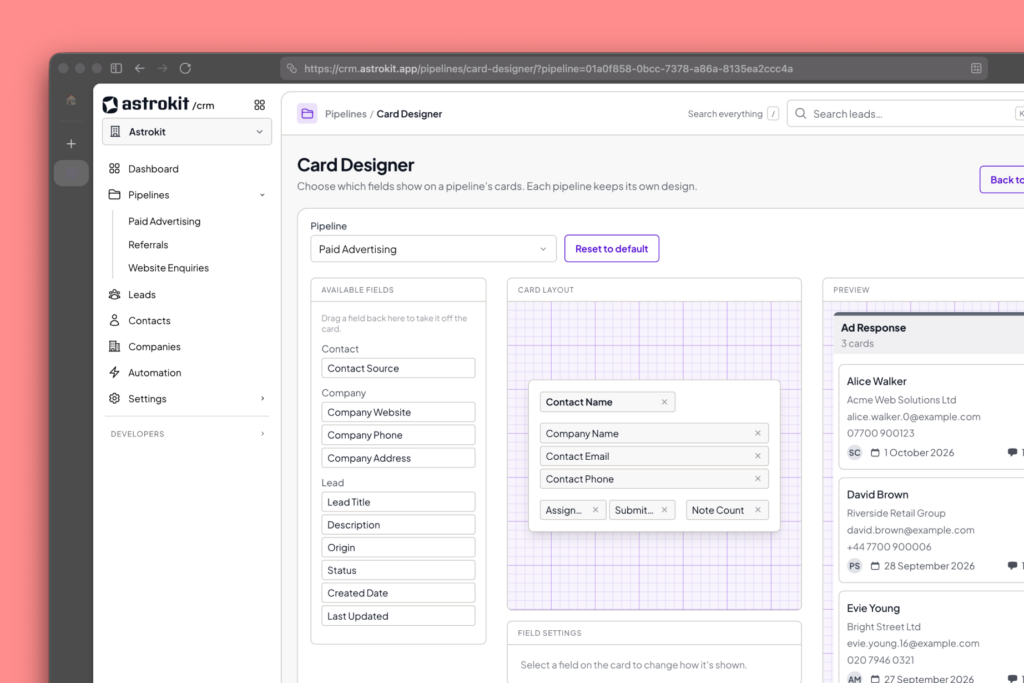
Each lead has its own record with contact details, any custom fields you need, a deal value and an expected close date. Calls, meetings, emails and notes are logged on a timeline against that person. When a customer rings back, whoever answers can see the whole story in seconds, including when you last spoke and what’s meant to happen next.
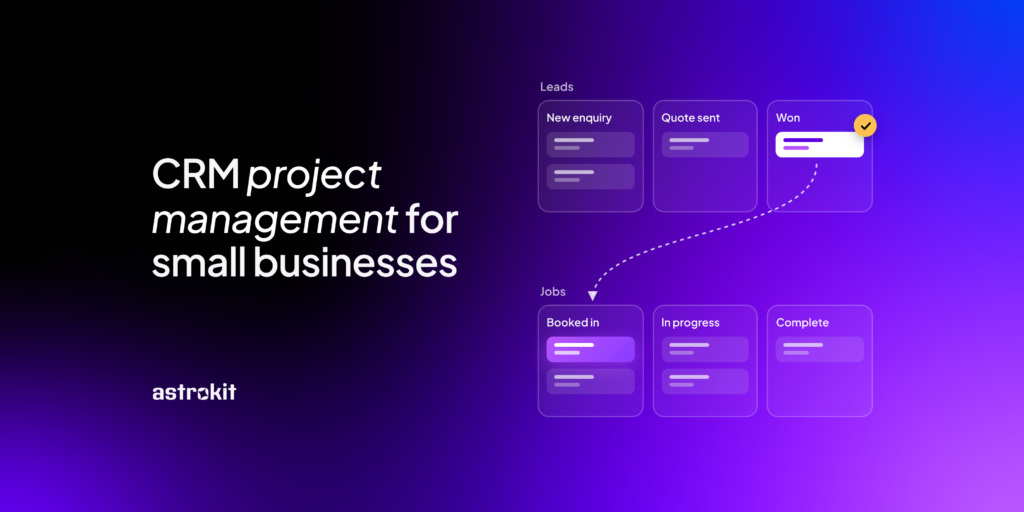
If you have a team, you can assign each lead to the right person and hand it over by hand if plans change. Nothing is reassigned behind your back, so everyone knows who owns what. And if your business has more than one flow of work, you can run separate pipelines, such as one for new leads and one for booked jobs.
5. Repeat and scale what works
Once you’ve tracked your leads for a couple of months, patterns start to show. Maybe leads from referrals close far more often than leads from Facebook ads. Maybe quotes that get a follow-up call within three days are twice as likely to be accepted. Maybe one stage is where most leads quietly drop off.
Put more time and money into the sources that bring in good customers. Turn the follow-up that works into a standard step, so it happens every time and doesn’t depend on who’s in that day. Look hard at the stage where leads stall and ask what’s missing. Often it’s a slow reply, an unclear quote or simply nobody chasing.
Make one change at a time, give it a few weeks, then check your numbers again. Small, steady tweaks add up. Plus, because your process is written down and visible on a pipeline, it’s much easier to bring a new team member up to speed as you grow.
Why use a CRM to manage your pipeline?
You can run everything above from a spreadsheet. Plenty of businesses start that way. The trouble is that a spreadsheet only knows what someone remembers to type in, and it doesn’t show you much unless you go looking.
A CRM is built for this one job. Your stages are right there on screen, so you can see what’s stuck without filtering a single column. Every call and email sits against the right customer, rather than in one person’s inbox. Two people can work on leads at the same time without overwriting each other. And when someone’s off or leaves, their leads don’t vanish with them.
The bigger win is consistency. When the process lives in a tool your whole team uses, it actually gets followed. Leads are contacted, quotes are chased and nothing relies on a sticky note by the kettle.
That doesn’t mean you need an enterprise system with a hundred features you’ll never open. Most small businesses need a clear pipeline, a proper record for each customer and a simple way to log what’s happened. Astrokit CRM is sized for exactly that.
How. typical business could use CRM to grow
Let’s take a small kitchen fitting business with an owner, an office manager and two fitters. Here’s how the first half hour of the office manager’s day might go.
Checking new leads have been contacted
The day starts with the “New enquiry” column. Three leads came in overnight from the website and one from a phone call the owner took on Saturday. Each one is assigned to a person, so it’s clear who’s calling whom. As each call is made, it’s logged on the lead’s timeline and the lead is dragged to “Contacted”. By half nine, that first column is empty.
Following up on quotes that haven’t had a reply
Next comes “Quote sent”. Five quotes are sitting there, and the timeline shows two of them haven’t heard from you in over a week. One gets a quick call. The customer was waiting on their partner and books a survey on the spot. The other gets a short, friendly email asking if they have any questions. Both are logged, so nobody chases the same person twice.
Planning a campaign to win back cold leads
Once a month, it’s worth looking at the leads you lost or that went quiet. Filter the pipeline for leads marked lost in the last six months. Some went with someone cheaper. Some just weren’t ready. A “we’ve missed you” message with a seasonal offer, like a free design visit in January, gives them a reason to get back in touch. Anyone who replies goes straight back into the pipeline as a new enquiry, with their full history still attached.
Close more leads with Astrokit CRM
Astrokit CRM is a simple CRM made for UK small and mid-sized businesses, with no extra fluff. Set up your own pipeline stages, drag leads along as they progress, and keep a full history of calls, notes and emails against every customer. Add a value and an expected close date to each lead, assign work to your team, and run more than one pipeline if you need to.
Ready to stop losing leads to a quiet inbox? Join the waitlist and be first in line when Astrokit opens its doors.