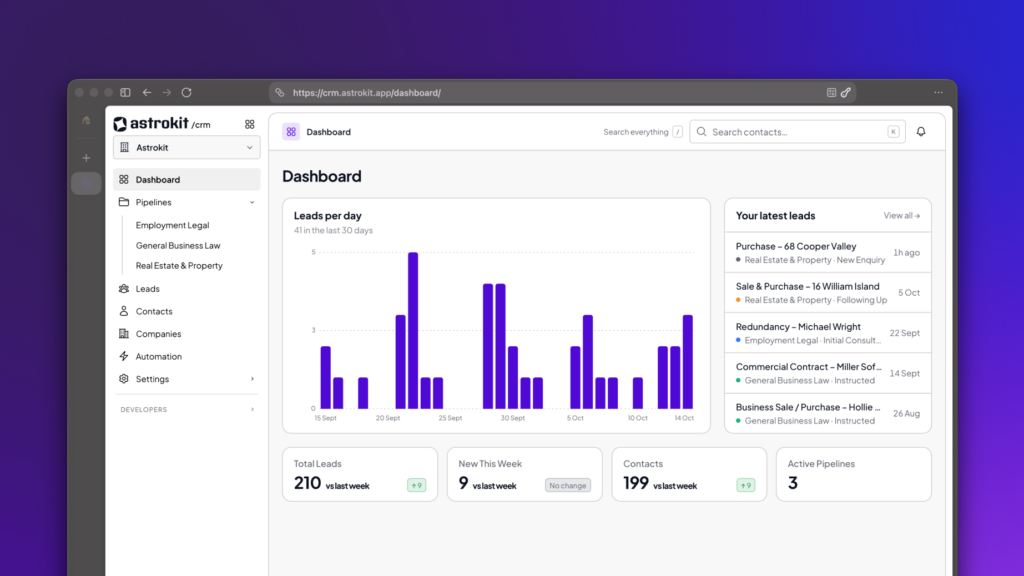

Try renaming a pipeline stage in whatever CRM you’re using now. If that takes two seconds, you’re in decent shape with flexible software. If it means a support ticket, a wait for a developer, or a paywall you didn’t know was there, you’ve already got your answer about how flexible the thing really is.
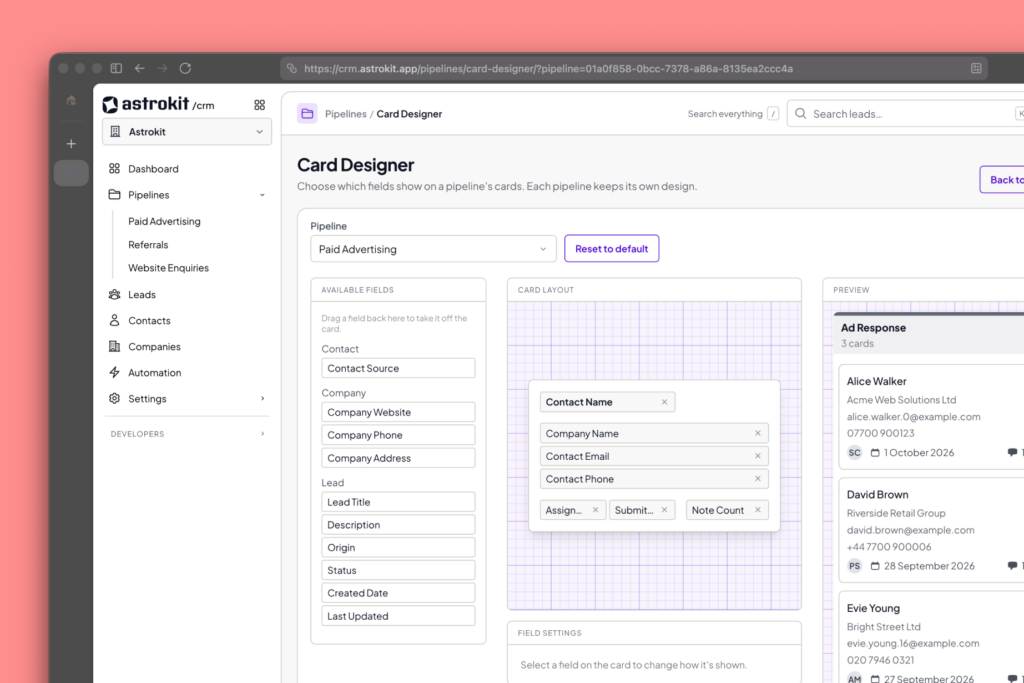
Can you afford to have these hurdles and delays every time you want to make a simple change to a pipeline? If you can’t, and who can, then you need a flexible CRM built with users in mind. Astrokit CRM lets you rename stages and set up your own fields yourself, without raising a support ticket first. Like a great CRM should.
What "flexible" should actually mean
Your sales process won’t always stay the same, and it probably does not match the standard shape a CRM built for the average customer. You’ll need specific industry steps, a custom sales flow tailored to your business or terms that a most CRM don’t accommodate. A CRM that’s genuinely flexible lets you run multiple pipelines, customise names and define the stages a lead takes. It should also allow you to choose which fields sit on a record so you can capture all the relevant details.
All without asking anyone’s permission first – apart from your manager of course. Without this flexibility you’re not customising the software. All you’re doing is working within someone else framework and making do. That’s not good enough.
Why the limits shows up at checkout, not in the demo
Most vendors will show you the flexible version or the top-shelf, fully featured flashy demo during a sales call – it’s not tailored to your business. It’s look what you could have if your willing to spend a small fortune. The pricing page where the catch lives.
One pipeline and a handful of custom fields on the entry plan, and everything past that sits behind a Professional or Enterprise tiered, often with a year’s fixed contract. That is manageable while things are simple. Then you add a new product line, or your sales processes changes and you need to collect new data. Leaving your migrating mid-year or paying for a plan built for a company five times your size.
Test it yourself before signing anything
Don’t take a demo’s word for it. During your trial, do the things you would need in three months rather than today. Add a second pipeline. Customise the lead stages. Build a field for something specific to how your business runs. If any of it’s locked, you’ve found the ceiling now instead of after your data’s already in there.
Meet Astrokit CRM
Multiple pipelines, stages you can rename your sales process, and custom fields are all open to you during the 3-month full-access trial. Test them properly before you pay and ensure we’re the right fit for you. After the trial, the Growth plan gives you unlimited contacts, pipelines, fields and more, so there is room for your team and process to grow.
It’s worth keeping in mind if you’re weighing us against other tools: limits on cheaper plans are often a business decision rather than a technical one, so it’s fair to ask whether it’s a limit you’d genuinely hit. Ours are simple.
Basic (£2.50/user/mo) caps you at 3,000 records and doesn’t include custom fields – perfect for storing your business contacts.
Growth (£9.50/user/mo) removes the cap and adds them. You don’t need five pipelines on your first day just because the option’s there. We let you build the structure you need as you need it without running into a need to upgrade for basic features.